

Is planting trees actually solving climate change?
Vaishnav B
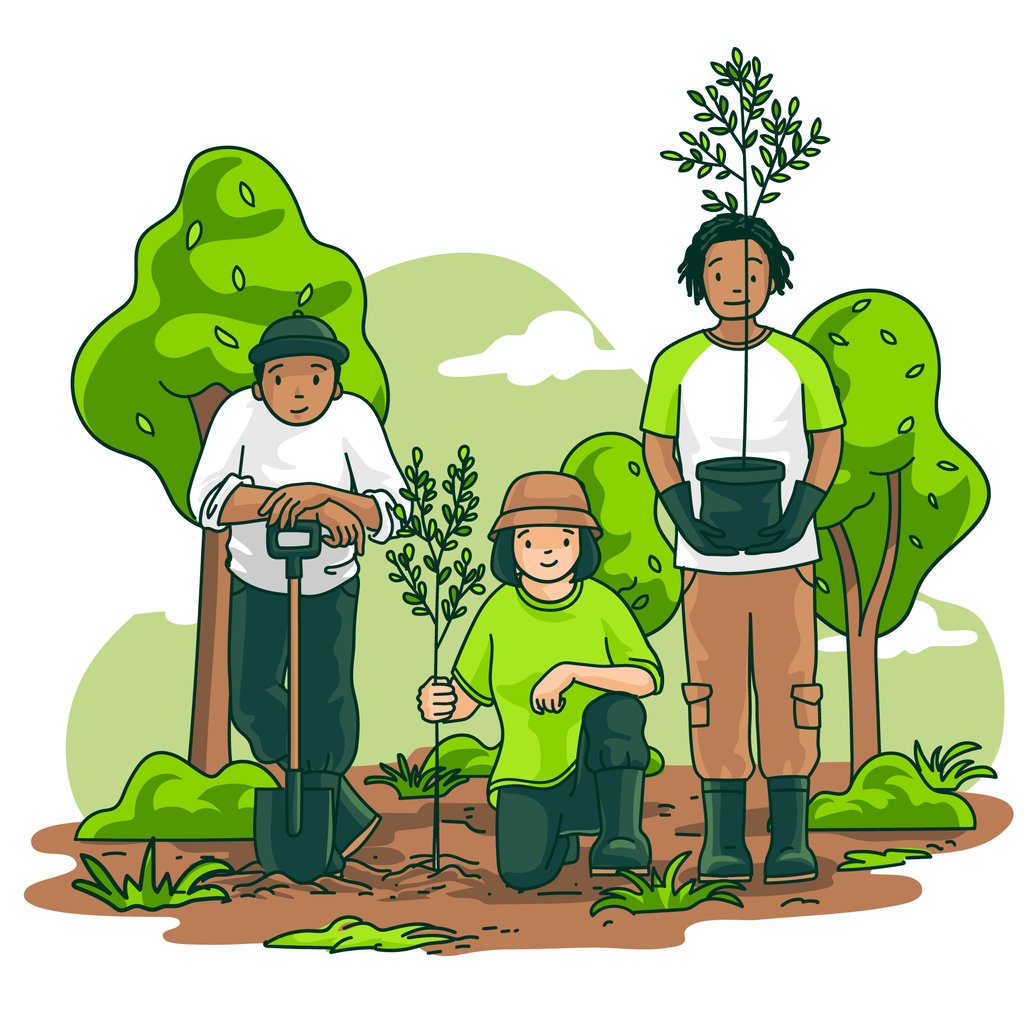
Everyone loves planting trees. Governments announce it. Corporates fund it. Politicians take photos next to saplings. And honestly, for a long time, we even believed it was one of the most straightforward solutions to climate change. But trees as a climate asset, needs to have a better understanding of it. Then we spent time actually studying it. And what we found changed how we see the entire thing. It not only gives you an understanding about a particular subject, it gives you a new perspective for life for which we are responsible to protect.
The number that sounds impressive
Half a trillion trees. That's what researchers say we could potentially plant across the world. And if done right, that could absorb around 205 gigatons of carbon, roughly 20 years worth of human emissions. The potential is real. The science behind trees absorbing carbon is real.
So why is mass tree planting still not working?
What actually happens on the ground
Here is what most people don't see after the plantation photo is taken.
Research across 130 countries found that roughly half the time, simply letting nature regenerate on its own works better than actively planting trees. Half the time. That means billions of rupees and dollars spent on planting programmes that nature could have handled better for free.
This data is based upon the curiosity of the claims that we had seen by the corporations, claiming thousands of trees being planted as a part of their CSR(Corporate social responsibility) initiatives but where do we see the output or anything which can stand with the claims they provide.
Why? Because most large scale tree planting programmes are obsessed with one number.
How many trees were planted.
Not whether those trees survived. Not whether they grew. Not whether they actually absorbed any carbon five years later.
In India, we have seen this pattern repeatedly. A company plants 10,000 trees for CSR. The photos go on the annual report. The press release goes out. And then, nobody checks what happened to those trees. Many of them die within the first year. The carbon impact is close to zero. But the PR value is high.
This is not climate action. This is climate theatre.
Remember, we are talking about half of the tree planting initiatives, follows the same pattern.
The species problem nobody talks about
Here is the part that genuinely surprised us when we went deeper into this.
Most large scale planting programmes plant the same five or six species chosen not for what the local ecosystem needs, but for how fast they grow or how valuable the timber is. Teak. Eucalyptus. A few others.
The problem? These species can overtake native vegetation.
They can drain local water tables. They can destroy the biodiversity that was already there. You end up with a monoculture plantation that looks green from a satellite but functions as a dead zone for local wildlife and soil health.
A forest is not just trees. It is a specific combination of species, soil organisms, insects, birds, and water systems that took decades or centuries to form. You cannot recreate that by planting the same fast growing tree across thousands of acres. This is being practiced in the restoration carbon projects to generate carbon credits, which is being funded by multinational companies, across various countries.
The right approach is planting species that are native to that specific location species that the local soil, rainfall, and ecosystem already knows how to support. This is slower. It is harder to scale. It does not make for impressive plantation numbers. But it actually works for long term climate commitment.
What the data says about monitoring
Trees absorb carbon over time but only if they survive, grow, and remain standing. A tree that dies in year two absorbed almost nothing because a tree needs to reach it mature stage which is roughly after 3 years in-order to be capable of absorbing carbon. A forest that burns in year ten, releases everything it stored.
The entire premise of tree based carbon projects depends on long term monitoring making sure trees survive, grow, and continue absorbing carbon across decades. But most programmes, especially in India, have no serious monitoring infrastructure. No satellites tracking survival rates. No ground teams checking growth. No accountability for what happens after the plantation day.
Without monitoring, you don't have a carbon project. You have a plantation event.
So does planting trees help or not?
Yes. But only when done right.
Protecting the forests we already have is more important than planting new ones, looking at the earth's current situation.
Letting degraded land regenerate naturally where possible is more effective than forcing new plantations. And when active planting is necessary, it must use native species, involve local communities, and include serious long term monitoring.
The best approach is a combination natural regeneration where possible, active planting of native species where necessary, and genuine monitoring throughout.
Planting trees is one tool. Not the solution to everything. And until we stop measuring success by how many saplings were photographed and start measuring by how much carbon was actually verified ten years later we are mostly just making ourselves feel better.
Why we care about this specifically
We started Co-Climate because we believed nature based solutions could genuinely contribute to solving climate change. We still believe that. But spending months in this space taught us that the gap between what gets announced and what actually happens on the ground is enormous.
The solution is not to stop planting trees. The solution is to stop treating tree planting as a marketing exercise and start treating it as a serious, long term, ecosystem-level commitment.
That is the difference between climate action and climate theatre.
Follow Co-Climate for more honest conversations about what actually works in the climate space.